Introduction to the Observatory
Observation of Plant Phenology

Japan has distinct seasonal changes, and we adjust our clothing and lifestyle accordingly. Animals and plants are also sensitive to these seasonal variations: they become more active, sprout new leaves, or come into bloom in response. For example, if the seasonal transition from winter to spring is delayed and early-spring temperatures are lower than average, the dates of cherry blossom flowering and full bloom are also delayed. By observing the dates on which the conditions of organisms change in step with seasonal progression each year, we can gain insight into changes in the climate.
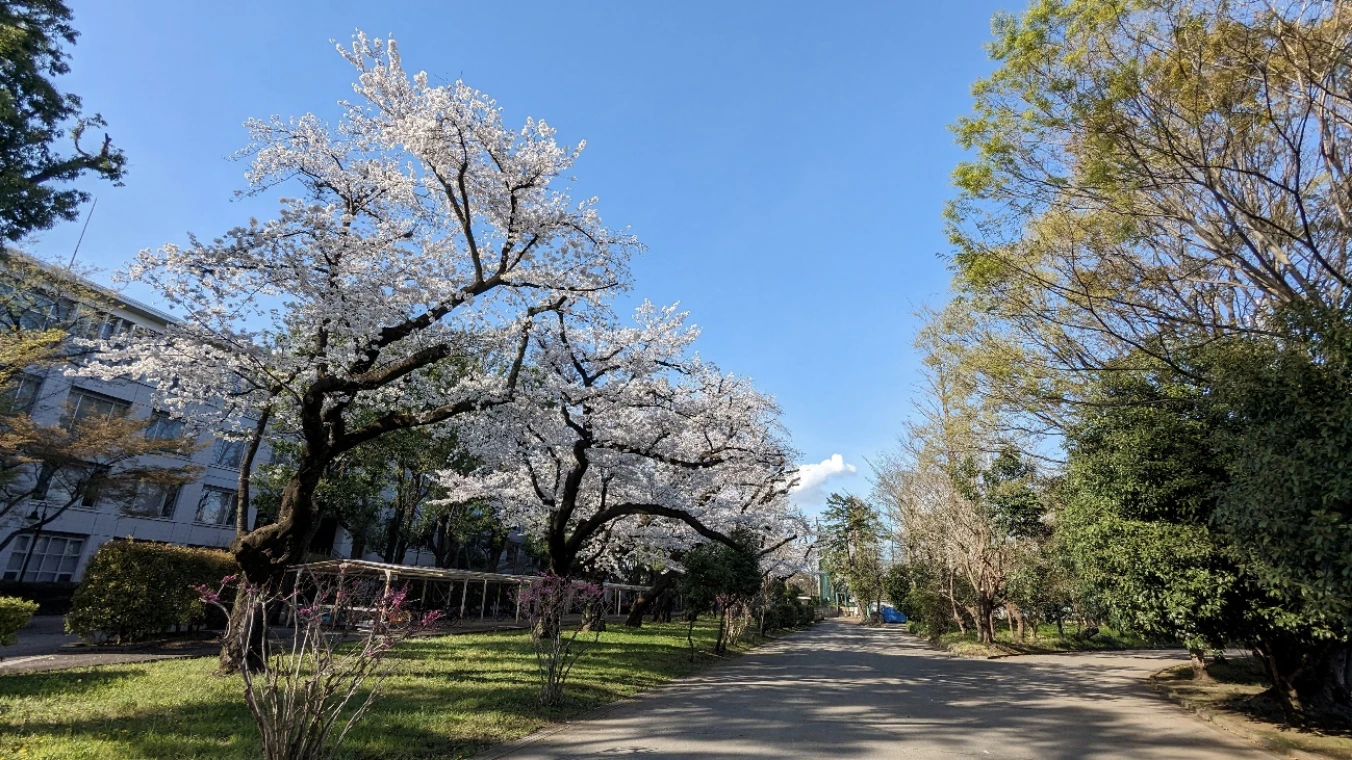
Since its establishment, the Seikei Meteorological Observatory has continued to record the dates of flowering and full bloom each spring using a cherry tree on the junior and senior high school grounds as a sample tree.
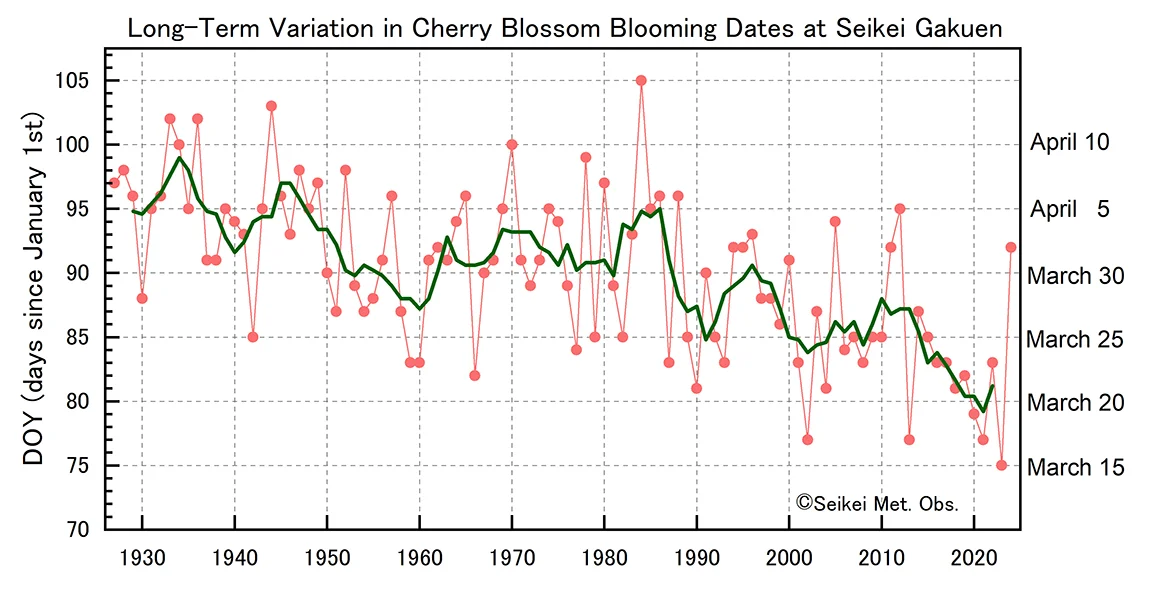
The following graph shows the long-term variation in the flowering dates of the Seikei cherry blossoms. The red circles represent the flowering date for each year, and the green solid line shows the five-year running means. The left vertical axis indicates the number of days elapsed since January 1, while the right vertical axis converts these values into calendar dates. Until the 1940s, the cherry blossoms typically flowered around April 5–10. Thereafter, flowering dates gradually shifted earlier, and by the 1980s it became common for them to bloom from late March to early April. Since the late 1980s, flowering dates have advanced rapidly, with the earliest on record occurring in 2023, when the blossoms opened on March 15. Compared to 100 years ago, this represents an advance of roughly two weeks. However, in the following year, 2024, the flowering date was delayed to April 1 despite a warm winter. This delay is attributed to the unusually low temperatures in March.